
Visionary Dreamtending From the Collective Unconscious of Children
Why kids are the most important storytellers in the AI era.

In my last post, I wrote about why I distrust the now-common practice of feeding a dream to the AI gods and accepting whatever symbolic gloss comes back. I called that outsourcing the unconscious. My belief stands untested.
So it might look like a contradiction that weeks later I was standing in a South Texas classroom helping children turn their dreams into AI-rendered film.
It’s not.
I maintain that the dreamer stays the author, the unconscious stays the source, and the machine becomes an instrument, not an authority consulted for meaning.
The beta version of Dreambuilders, a collaboration with Talentless AI honcho Steve Mudd, was built entirely on that principle: Dream first. Pencil second. Screen third. and NEVER ask an algorithm what it all means.
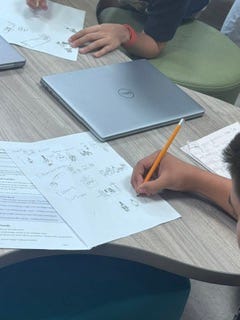
Before a single prompt was typed, before any image was rendered, 16 middle-schoolers were given two-weeks of dream-catching assignments. From there, they mapped the terrain of sleep and extracted the elements: setting, character, challenge, emotion, and magic tones that are difficult for logic to reconcile.
Working in small groups, they pooled their separate dreamscapes, and out of that pooling, something emerged from the collective.
This is close kin to what the psychoanalyst W. Gordon Lawrence called the social dreaming matrix: the idea that when dreams are shared rather than merely interpreted, they reveal a connective tissue beneath individual psyches. This field of meaning that belongs to the group, not the self.
The generative tools didn’t always comply. Rather than abandon the work, the students adapted by reframing their language, refining their intent, and trying again.
By the end of the day, one team’s script was run through the generative system, and out came a three-minute film built entirely from a classroom’s worth of pooled dreaming. Their task was never to invent the vision, only to give it a form sturdy enough to survive the journey back into daylight.
Luckily, the cynicism of “AI slop” was nowhere in the room. They were doing something closer to what dreamers have always done.
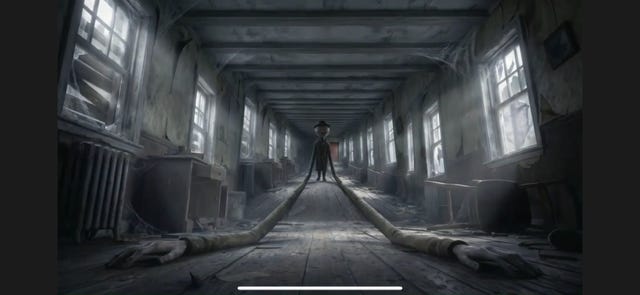
There’s a reason almost no human culture has ever treated dreaming as strictly private. In communities where dream life is taken seriously, a dream told upon waking doesn’t belong only to the dreamer. It gets brought to the fire, and the group works on it together: weaving it into the larger story the tribe is already telling itself about who it is and what it’s facing.
That matters because a dream that surfaces alone in the dark, often carries more than that one mind can hold. Kept private, that fear calcifies into anxiety with nowhere to go. But offered to the group, the fear becomes a plot the tribe can look at together.
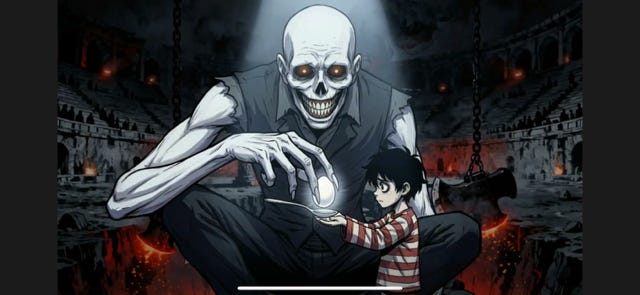
A room of children, the most screen-native generation that has ever existed, growing up inside a culture visibly anxious about the very tools they were just handed, pooled their separate unease and turned it into shared myth.
Whatever the surface content of their films (and there was no shortage of fear, loss and conflict), the deeper function was the oldest one there is: giving collective fear a shape small enough to hold, and holding it together.

This is also the real difference between what they made and what gets waved off as “AI slop.” Slop is fear, or boredom, or appetite, generated alone and broadcast outward for an algorithm to reward. The classroom moved in the opposite direction.
The technology was incidental. The function of turning private dread into communal narrative so the tribe can carry it forward, together is the same one dreaming-in-community has always served, with or without a machine in the room.